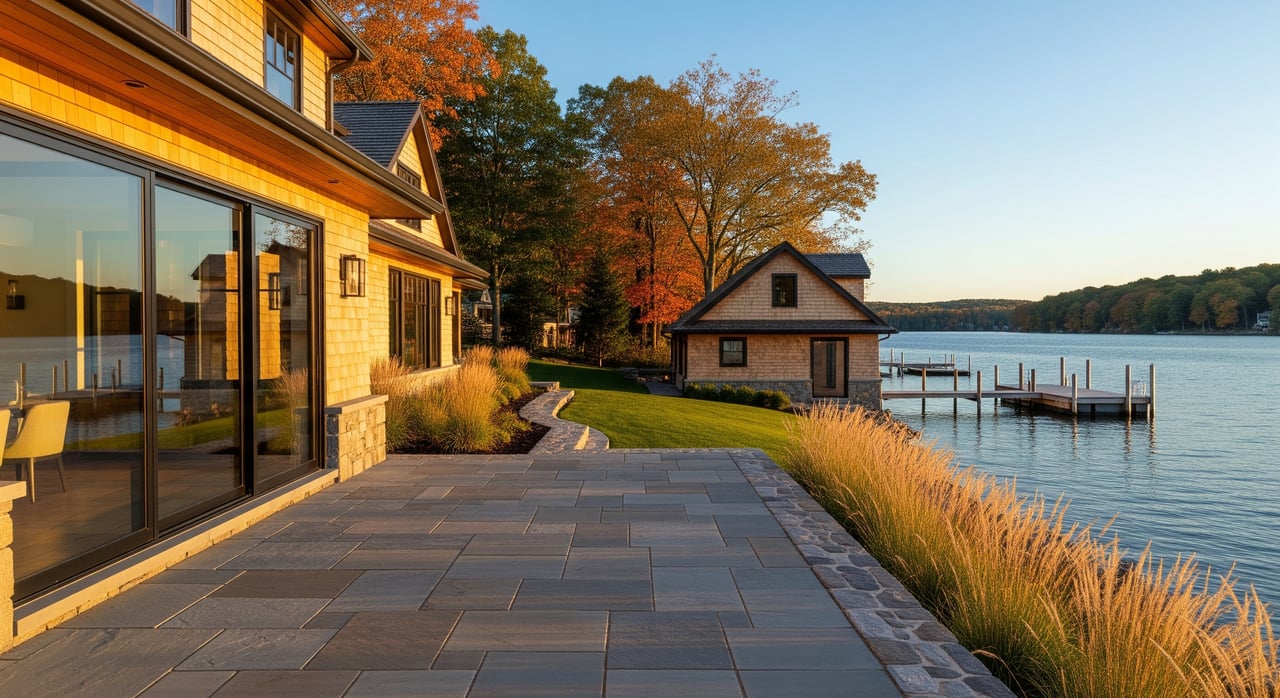
Thinking about updating a Candlewood Lake home in New Fairfield? The views are worth it, but the permits can feel like a maze. You want a smooth project that protects your investment, your shoreline, and your timeline. In this guide, you’ll learn which approvals you need, how to prepare a strong application, what timelines to expect, and the common pitfalls to avoid. Let’s dive in.
What permits you will likely need
Town building and zoning
You will apply to the New Fairfield Building Department for structural, electrical, plumbing, and mechanical work. Many projects also need zoning sign-off for setbacks and coverage before a building permit is issued. Start with the town’s building and zoning pages to understand what applies to your lot and project scope. Review the town’s Building Department resources and applications on the New Fairfield Building Department page and specific forms on the building permit applications page. Zoning details and contacts are listed on the Zoning Commission page.
Inland wetlands and upland review area
Work within mapped wetlands, watercourses, or the town’s upland review area near Candlewood Lake typically needs approval from the Inland Wetlands/Conservation Commission. Expect to submit site plans and erosion controls, and be ready to discuss mitigation if you remove native vegetation. Meeting schedules and materials are posted on the Conservation/Inlands Wetlands page.
CT DEEP for docks and in-water work
If your project involves docks, swim areas, dredging, or shoreline structures, you will work with the CT Department of Energy and Environmental Protection’s Land & Water Resources Division. Depending on the scope, DEEP may issue a Certificate of Permission, a General Permit, or an individual Structures, Dredging & Fill permit. DEEP recommends a pre-application conversation and accepts many filings through its portal. Start with DEEP’s Residential Dock Guidelines and the LWRD applications and ezFile page.
FirstLight and Candlewood Lake Authority
FirstLight Power manages the Candlewood Lake project area and often requires a separate license or permission for docks, lifts, seawalls, vegetation removal, and other shoreline uses. Coordinate with FirstLight early and expect to provide copies of your town and state approvals. See the FirstLight permits page for guidance. The Candlewood Lake Authority shares lake-friendly practices and points you to the right agencies on its Property Owner guidance page.
U.S. Army Corps of Engineers
Some in-water work, dredging, or placing structures in navigable waters may fall under federal jurisdiction. Many small projects fit within nationwide permits, but you should confirm. The Corps’ overview on authorizations is a useful starting point: see the Regulatory Program FAQs and Nationwide Permits overview.
Septic and B100a review
If your renovation adds bedrooms, increases water use, or changes the home’s use, a septic feasibility review under Section 19-13-B100a is often required before zoning or building approvals. A licensed sanitarian or engineer typically performs soil tests and documents a reserve area. Learn more on the CT Department of Public Health’s subsurface sewage program page and through local health officials.
What to prepare before you apply
Site plans and surveys
Prepare a current survey and site plan that shows property lines, contours, existing structures, septic locations, and any wetlands or watercourses. Accurate plans help every agency review your application efficiently.
Dock and shoreline drawings
If you are proposing a dock, swim float, or shoreline structure, you will need scaled drawings with dimensions, materials, and construction methods. DEEP’s dock guidance outlines typical submittals and standards for size and placement.
Erosion and sediment controls
Plans should show silt fencing, limits of disturbance, staging areas, and measures to keep runoff out of the lake. DEEP and the town focus closely on how you will protect water quality throughout construction. See DEEP’s LWRD applications page for expectations.
Wetland delineation
If your work is near mapped wetlands or within the upland review area, hire a qualified consultant to flag resources, provide a delineation memo, and suggest mitigation if needed. The town’s Conservation/Inlands Wetlands resources outline local review practices.
Septic feasibility (B100a)
Schedule deep test pits and percolation tests if your project increases bedroom count or wastewater flow. The review can determine whether your addition is feasible and is often a precondition for zoning and building approvals. Learn more from DPH’s subsurface sewage guidance.
Timeline and fees to expect
Town building permits are reviewed under the state code process and often require prior zoning and wetlands sign-offs. Allow several weeks to a few months depending on complexity and application completeness. The town’s building fee schedule explains how fees are calculated.
For DEEP, Certificates of Permission and General Permits are commonly processed in about 90 days for complete applications. Individual Structures, Dredging & Fill permits can take several months, often 6 to 12 months, and include public notice. Start planning early using DEEP’s Residential Dock Guidelines.
FirstLight’s license review will add time, and they often want to see local and state approvals first. Keep them in the loop to avoid rework. If a project needs U.S. Army Corps authorization, expect additional time for federal review even if your work fits a nationwide permit.
Seasonal realities on Candlewood Lake
FirstLight schedules seasonal drawdowns that can make shoreline access easier for repairs and dock work. Coordinate construction with drawdown timing and your permit conditions. Regional outlets and lake agencies announce these windows, such as this recent coverage of scheduled drawdowns on Candlewood Lake.
Environmental protections also factor into timing. Vegetation removal near the shoreline is often limited, and agencies favor native buffer restoration over hard structures. The Candlewood Lake Authority’s lake-friendly property tips are a helpful reference as you design your plans.
Common mistakes to avoid
- Starting shoreline work without FirstLight, DEEP, or federal authorization.
- Skipping the B100a septic review when adding bedrooms or converting use.
- Assuming a small DIY dock, float, or buoy is exempt from permits. Review DEEP’s coastal permitting FAQs before you buy materials.
- Submitting applications out of sequence. A good rule is to consult the town and DEEP early, then proceed in a coordinated order and keep FirstLight copied on submittals.
A step-by-step game plan
- Gather property facts
- Confirm where your shoreline sits relative to the FirstLight project boundary and review homeowner guidance on the Candlewood Lake Authority site.
- Schedule pre-application check-ins
- Speak with the town’s Building, Zoning, and Inland Wetlands staff. For in-water work, request a DEEP pre-application conversation using the LWRD resources. Contact FirstLight early about licensing.
- Hire your team
- Engage a surveyor, a wetlands consultant, and a licensed sanitarian or engineer for septic testing if needed. Consider a marine or structural engineer for docks or shoreline structures.
- Assemble complete applications
- Prepare a survey, site plan, construction drawings, erosion controls, wetlands delineation, and septic feasibility documents. File with the town and DEEP, and coordinate with FirstLight on licensing.
- Plan the build window
- Align your contractor’s schedule with DEEP processing times, town hearings, and FirstLight drawdowns. Do not start work until all required permits and licenses are in hand.
Buying or selling a lakefront home
If you plan to sell, gather documentation for any existing docks or shoreline improvements, including FirstLight licenses and DEEP approvals. Buyers should verify that structures and past work were permitted and ask about septic capacity if they intend to add bedrooms. Addressing B100a feasibility, wetlands constraints, and lake licensing early helps you avoid surprises during inspections and negotiations.
Ready to talk strategy for your lakefront purchase or sale in New Fairfield? Reach out to Todd P. Sargent for local guidance and a clear plan.
FAQs
What permits do I need to replace a dock on Candlewood Lake in New Fairfield?
- You typically need town sign-offs, CT DEEP authorization, a FirstLight license, and possibly U.S. Army Corps confirmation if federal jurisdiction applies; start with DEEP’s dock guidelines and FirstLight’s permits page.
How long does a DEEP dock or shoreline permit take?
- Streamlined authorizations like Certificates of Permission and General Permits often process in about 90 days, while individual permits can take 6 to 12 months depending on scope and public notice requirements.
Do I need a wetlands permit if I work 150 feet from the water?
- Likely yes, because activities within the town’s upland review area near Candlewood Lake are regulated; check the Commission’s schedule and guidance on the Conservation/Inlands Wetlands page.
What is a B100a review and when is it required?
- B100a is a septic feasibility review required when additions or changes could increase wastewater flow, such as adding bedrooms; details are on DPH’s subsurface sewage program page.
How do seasonal drawdowns affect my renovation timeline?
- FirstLight’s scheduled drawdowns can make shoreline work easier and may be referenced in permit conditions, so plan construction to align with drawdown windows announced by lake agencies and local news.